Best Seat Cushions for Long Sitting Sessions in 2026: What Independent Reviewers Actually Found
Sitting for eight or more hours a day puts relentless pressure on the tailbone, sit bones, and lower back — and a good seat cushion can meaningfully change that picture. After trawling through dozens of independent tests and owner reviews, one truth emerges quickly: reviewers rarely agree on a single winner, but they do converge on what separates a cushion worth buying from one that will go flat in a month.
The Short Version
For most desk workers, the Cushion Lab Pressure Relief Seat Cushion and the ComfiLife Gel Enhanced Seat Cushion earn the broadest cross-reviewer approval in 2026. The Purple Royal/Ultimate Seat Cushion divides opinion sharply — beloved by some long-term testers, criticised for heat compression by others. Budget picks can work for occasional use but nearly every tester warns that cheap foam bottoms out faster than advertised.
What the Reviews Agree On
Across Popular Science, Bob Vila, BTOD, Yawnder, Automoblog, and Ergonomic Zone, several themes repeat reliably:
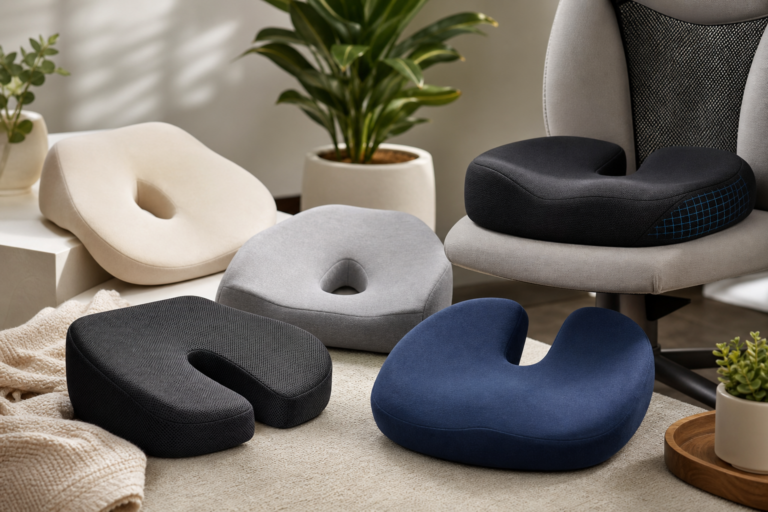
- Coccyx cutouts matter. Every outlet that tested multiple shapes preferred cushions with a tailbone relief notch for sustained sessions. Automoblog explicitly flagged this as the single most important structural feature for people who sit four or more hours without a break.
- Non-slip bases are non-negotiable. Popular Science and ShopSavvy both listed forward-sliding cushions as their biggest complaint in budget models — a rubberised or velour underside is a basic requirement, not a premium add-on.
- Budget foam compresses fast. BTOD’s Greg Knighton, who has personally reviewed hundreds of office accessories, ran a direct price comparison and found the $22.99 WAOAW cushion noticeably less supportive than mid-range options after only a few weeks of daily use. Popular Science echoed this concern, noting that dense foam construction correlates directly with longevity.
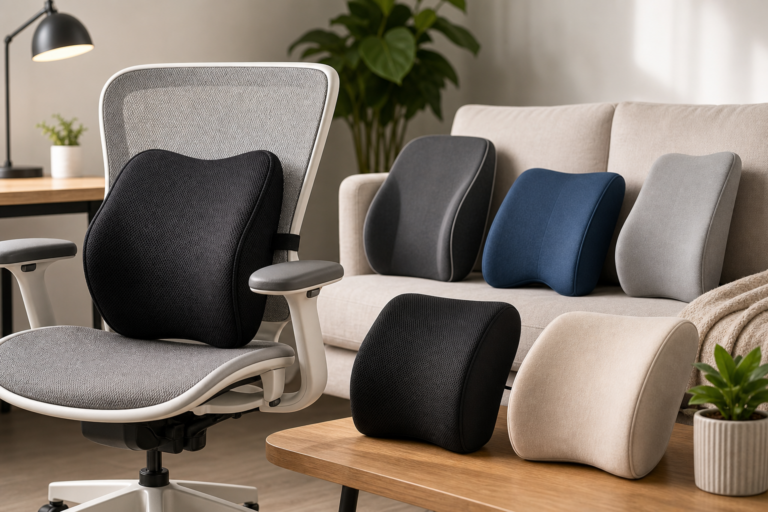
- Pair with lumbar support. Yawnder’s reviewer and the Cushion Lab editorial team both concluded — independently — that seat cushions perform meaningfully better when combined with a separate lumbar pillow, since neither product alone corrects the full seated posture chain.
- Break-in time is real. Ergonomic Zone’s comparison of the ComfiLife and Everlasting Comfort models notes that both require a short adaptation period before reaching optimal comfort, and several ShopSavvy testers reported the Tempur-Pedic cushion felt too firm on day one but softened usefully over several weeks.
Comparison Table: Six Top Picks at a Glance
| Cushion | Fill Type | Approx. Price | Best For | Main Caveat | Sourced From |
|---|---|---|---|---|---|
| Cushion Lab Pressure Relief | HYPERFOAM™ memory foam, charcoal-infused | ~$75 | All-day desk use | Requires correct chair height; size matters | BTOD (Greg Knighton), Yawnder, Verpal |
| ComfiLife Gel Enhanced | Gel-infused memory foam | ~$55 | Cooling + value | Firmer feel; gel layer thins with heavy use | Popular Science, Ergonomic Zone, ShopSavvy |
| Purple Royal / Ultimate | Hyper-elastic polymer grid | $95–$159 | Pressure relief + airflow | Shifts forward; gel compresses under sustained load per BTOD | Bob Vila, BTOD, Automoblog, ShopSavvy |
| Everlasting Comfort | Pure memory foam | ~$40 | Budget contouring | Heat retention; can compress with heavy daily use | Ergonomic Zone, Automoblog |
| Tempur-Pedic Seat Cushion | TEMPUR® material (high-density foam) | ~$75 | Long-term shape retention | May feel narrow for larger frames; no anti-slip base | ShopSavvy, Verpal |
| Xtreme Comforts Large | Memory foam, vented cover | ~$35 | Budget softness | Not ideal for tailbone or sciatic-specific pain | ShopSavvy, Verpal |
Where They Disagree
The most pointed reviewer disagreement in 2026 centres on Purple’s polymer grid technology. Bob Vila’s tester, who logged roughly 1,500 hours of use over two years, awarded the Purple cushion an 8.5 out of 10 and found it substantially extended uninterrupted comfortable sitting — from under 20 minutes to well over an hour per session. The BobVila reviewer called it durable and effective at relieving joint pressure over the long term.
BTOD’s Greg Knighton came to a notably different conclusion. In a direct three-way price comparison, he found that the Purple Double’s gel “warms up and compresses within an hour of continuous use,” undermining its premium positioning. Knighton named the Cushion Lab as the better all-day option at a lower price. Automoblog also flagged that the Purple cushion shifts on certain chair surfaces — a stability complaint that Bob Vila separately acknowledged but treated as a minor inconvenience rather than a dealbreaker.
A second disagreement concerns the memory foam versus gel hierarchy. Cushion Lab’s editorial content argues that modern charcoal-infused memory foam outperforms gel for sustained sessions because it maintains its shape better over time and handles heat through breathable materials rather than through gel’s cooling properties alone. Ergo21’s critical analysis, by contrast, explicitly refuses to declare a winner, concluding that the best fill type depends on the individual’s body weight, heat sensitivity, and specific pain points. Popular Science, meanwhile, lists the Purple (a gel-grid product) as its “best splurge” pick — implicitly disagreeing with the foam-first argument.
There is also a split on Tempur-Pedic’s slim profile. Verpal’s guide flags the lack of an anti-slip bottom as a practical frustration, and notes the 2-inch height may not suit every chair. ShopSavvy rates it best overall at 8.4 out of 10, crediting its dense TEMPUR® material for reliable shape retention. Neither source is wrong — the discrepancy likely reflects different chair types and user frames in testing.
Finally, budget picks divide reviewers along use-case lines. BTOD’s Knighton found the sub-$25 WAOAW cushion inadequate for full workdays. Yet ShopSavvy’s testers awarded the Xtreme Comforts Large a 7.5 out of 10 and considered it a reasonable choice for users without specific pain conditions — suggesting budget foam is serviceable for lighter or more intermittent sitting rather than marathon office sessions.
Key Buying Considerations
- Duration of use: For genuinely all-day sitting (6+ hours), Ergonomic Zone, BTOD, and Yawnder all point toward denser, higher-quality foam rather than budget alternatives that compress under sustained load.
- Heat sensitivity: Ergo21’s analysis singles out gel or ventilated foam as better for warm climates or users who run hot, while standard memory foam suits cooler environments or those who prioritise contouring over temperature control.
- Chair compatibility: Yawnder emphasises measuring seat pan depth before purchasing — a cushion that overhangs or undercuts the chair pan significantly will not perform as reviewed, regardless of brand.
- Body weight and size: ShopSavvy’s testers noted that the Tempur-Pedic’s 16-inch-by-16-inch footprint suits average frames, while Automoblog flagged that the Everlasting Comfort may feel narrow for larger users — two data points that suggest sizing is as important as material choice.
FAQ
How thick should a seat cushion be for long sitting?
Most reviewers, including ShopSavvy and Verpal, point to a 2–3 inch profile as the practical sweet spot for office chairs. Thinner than 2 inches and pressure relief is limited; thicker than 3 inches and the elevated seat height can conflict with armrests, lumbar support, and desk height. BTOD’s Greg Knighton notes that cushion thickness also affects how much your knees drop relative to your hips — ideally the thighs should remain roughly parallel to the floor.
Does gel really stay cooler than memory foam?
Reviewers are split. Ergo21’s analysis confirms that gel-infused cushions dissipate heat better in short bursts, but BTOD’s Knighton found the Purple’s polymer grid warmed considerably during extended continuous sitting. Popular Science’s testing suggests gel provides a noticeably cooler first hour, while Cushion Lab’s editorial content argues that modern charcoal-infused foam with a breathable cover narrows the gap meaningfully for all-day use.
How long do seat cushions typically last?
Bob Vila’s long-term tester found the Purple cushion retained its shape after approximately 1,500 hours of use across two years. BTOD found cheap foam alternatives began compressing within weeks of daily use. Yawnder’s reviewer noted that Cushion Lab’s HYPERFOAM™ construction was specifically designed to resist the flattening that affects generic memory foam, though no independent multi-year durability test for that product yet exists in the sources reviewed here.
Should I combine a seat cushion with a lumbar pillow?
Both Yawnder and Cushion Lab’s editorial team recommend this combination — not for marketing reasons, but because a seat cushion corrects pressure distribution at the base while a lumbar pillow addresses the inward curve of the lower spine. Using both together reduces the tendency to slouch forward that a seat cushion alone can encourage by tilting the pelvis.
Are coccyx cutout cushions always better?
For users with tailbone pain, sciatica, or post-surgical sensitivity, Automoblog and Popular Science both treat the cutout as essential. For users without those conditions, Verpal’s guide notes that a contoured but uncut surface — such as the Tempur-Pedic’s — can distribute weight more evenly across the full seat surface without creating a pressure ridge at the cutout edge. If you do not have a specific tailbone complaint, a U-shaped cutout is a preference rather than a requirement.
Sources
- popsci.com
- bobvila.com
- btod.com
- yawnder.com
- ergonomiczone.com
- automoblog.com
- ergo21.com
- shopsavvy.com
Related Articles